

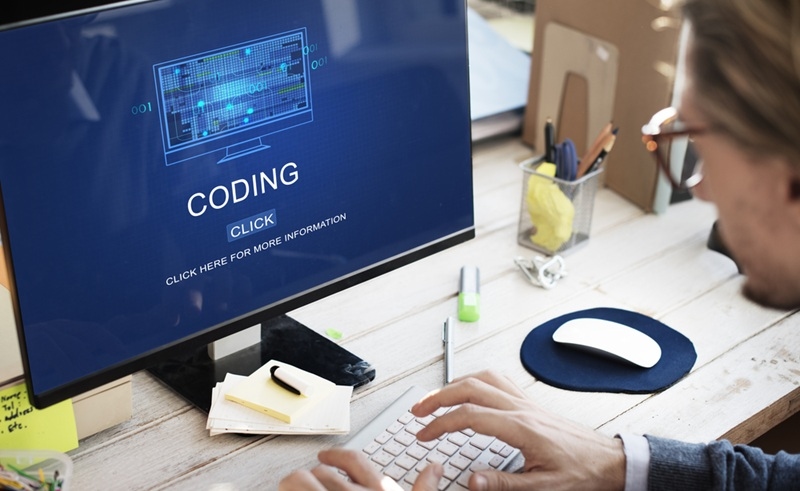
Starting a new hobby is always scary, but figuring out how to learn to code as a beginner is actually one of the most fun things a person can do today. Many people think you need to be a math genius or have a giant brain to understand programming basics, but that just is not true at all. If a person can follow a recipe to bake a cake, they can definitely learn to code as a beginner. Building coding skills takes a little bit of time and patience, but the rewards are huge because computers are everywhere now.
Mastering a new language for a computer is akin to mastering the art of talking to your robot friends. If one wishes to master programming, one must commit to a path and stay on it for an extended period. While the allure of all the flashy buttons and varied languages can easily distract a person from their goals, concentration is key.
It seems easier when divided into steps, doesn't it?
Before jumping into the deep end of the pool, it helps to know what a computer actually does. Computers are actually quite silly because they only do exactly what they are told to do. If a person gives a computer a bad instruction, it will just make a mistake. Learning programming basics means learning how to give very clear, concise instructions.
What this really means is that a student needs to learn about variables, which are like little boxes that hold information. Loops can be written to tell the computer to perform a particular action repeatedly until the job is done. Once you learn all this, it will be easier for you to progress further on the path of learning to code.
There are plenty of programming languages, such as Python, JavaScript, and Ruby. For most people, it is better to start with Python because its syntax resembles the everyday English. If someone wants to make websites look pretty, they might start with HTML and CSS instead. The important thing is not to worry too much about which one is "best" because once a person learns one, the others become much easier to understand.
Here is the thing: nobody needs to spend thousands of dollars at a fancy school to get started. There are plenty of websites that offer free coding lessons for beginners. These sites often feel like a game where players earn points for solving puzzles. It is a very good way to build confidence without feeling any pressure.
The best way to grow coding skills is to actually build things. Reading a book about riding a bike is not the same as getting on the bike and pedaling. A beginner should try to make a calculator or a digital clock. These small wins make the brain feel happy and keep the motivation high. When a person sees their own code working on the screen, it feels like magic.
Nobody should have to learn alone in a dark room. There are many online groups where people help each other. If a person gets stuck on a problem, they can ask a question and someone nicer will usually explain the answer. Sharing progress with others helps keep a person accountable and makes the whole process much more social and fun.
In the world of computers, mistakes are called bugs. Every single coder makes bugs every day, even the ones who work at big, famous companies. When something does not work, it is not a sign that a person is bad at coding. It is just a puzzle that needs to be solved. Learning how to find and fix these bugs is actually where the real learning happens.
Becoming skilled at coding for beginners requires persistence like running a marathon rather than a sprint. Consequently, one is advised to practice every day for several minutes rather than spend ten hours per month studying. Gradually, hard problems begin to appear simpler, and sooner or later, the coding process becomes natural.
The process of learning to code for beginners can be amazing as there are countless possibilities involved. Everyone has a chance to acquire sophisticated programming skills by focusing on the basics and training consistently. Be patient while studying and cherish the opportunity to make things by oneself. Begin your journey into the first lesson and enjoy the process!
Not at all. To begin learning programming, it is not necessary to have advanced math knowledge. In general, the process involves using rather elementary mathematical skills, such as basic calculations and logical thinking. When someone knows how to do simple arithmetic operations and follow the step-by-step process, he or she already has enough skills to begin a computer programming career.
This will vary depending on how many hours one dedicates himself/herself to learning per week. The basics of programming can be learned in a couple of months. However, it may take years of consistent practice to become an expert programmer, but a person can begin creating simple programs and websites within weeks of practicing.
While having a computer is very helpful for typing, a person can start learning the logic behind it using apps on a phone or tablet. Many books also teach the concepts of thinking like a programmer without needing a screen. However, to actually build things and see them work, a laptop or desktop is eventually needed.
There can never be one perfect programming language for everybody since it all depends on what one wants to make. While Python is suitable for data analysis and basic programs, JavaScript remains the top choice for creating lively web pages. In any case, when getting started, one should pick something interesting enough and just keep going until they learn how to program.
This content was created by AI